APIs: The Invisible Power Behind Business Growth – And How to Secure & Monetize Them
- Guest Author
- 8 May 2026
- Blog
- 0 Comments
“Do You Know Why the API Economy Is Booming Like Never Before?”
The Burning Problems
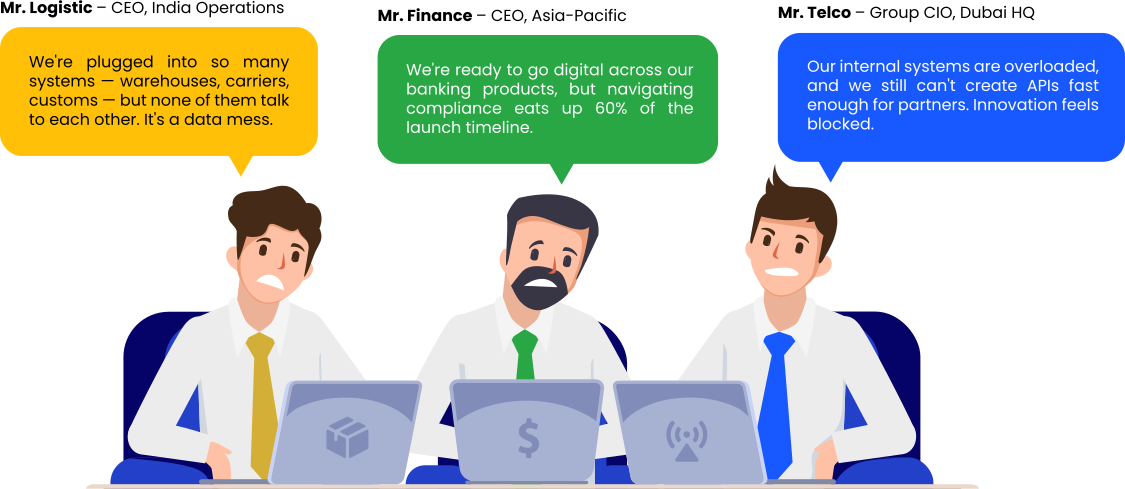
Global industries are changing fast, but many are still struggling to scale efficiently. According to a McKinsey study titled Unlocking Success in Digital Transformations, over 70% of digital transformations fall short of their goals due to factors like integration complexity, lack of clear vision, and insufficient governance frameworks (McKinsey & Company, 2018). https://www.mckinsey.com/capabilities/people-and-organizational-performance/our-insights/unlocking-success-in-digital-transformations
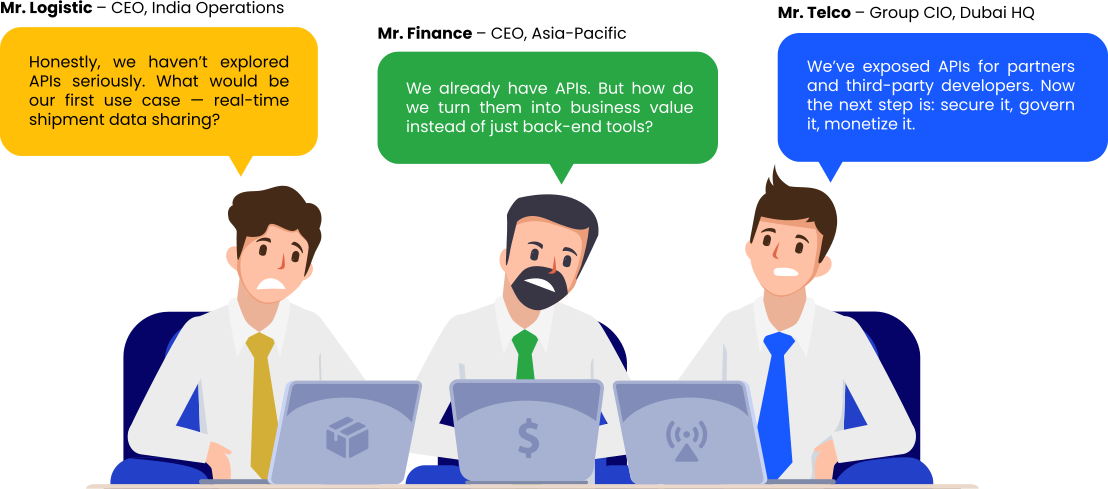
In the logistics sector, a DHL study revealed that 95% of companies cite real-time data access as a critical challenge. EY reports that financial institutions face mounting regulatory costs while trying to deliver seamless digital experiences. Meanwhile, a Gartner survey shows telco companies are losing millions due to API sprawl and ungoverned integrations.
As Deloitte notes, companies with mature API strategies outperform competitors in speed, flexibility, and innovation. Stripe, Twilio, and Amazon are leading examples, demonstrating how APIs can transform industries. Stripe generated over $12 billion in 2022 through its API-first payment platform, showcasing how governance enables secure scalability and partner trust. In logistics, APIs allow real-time shipment tracking across platforms—just like DHL’s “Follow My Parcel” system, which uses API-driven updates to let customers know exactly when and where their deliveries are. In finance, APIs fuel open banking innovations. And in telco, they enable everything from number provisioning to billing automation.
Despite their differences, these companies share a common challenge: how to scale and innovate without compromising security, compliance, or speed. This is where the API economy is booming. According to Forbes (https://www.forbes.com/councils/forbestechcouncil/2023/06/01/apis-are-essential-in-enabling-the-global-economy/), APIs are becoming the invisible foundation of the modern global economy.
API Economy is Booming — Let's Join
Just as social media redefined how people connect, the API economy is redefining how businesses interact, collaborate, and create value. It allows organizations to expose, share, and monetize their capabilities, forming new revenue streams and service models that wouldn’t be possible in traditional systems.
What started in finance as open banking has now evolved into open ecosystems across industries like logistics, telecom, and healthcare. Today, APIs are no longer backend tools; they are business enablers that drive speed, connectivity, and innovation.
By transforming traditional software into flexible modular components, commonly known as micro services organizations can expose specific functions or data points through APIs, making them reusable, composable, and monetizable.
As businesses increasingly adopt API-first strategies, they gain agility in building user-centric applications that improve operational efficiency and customer experience. APIs also make it easier to integrate third-party services, collaborate with partners, and offer data-driven services at scale. This shift helps companies transform their core capabilities into products others can consume, turning operations into platforms.
The rise of mobile computing and IoT has further fuelled demand for API-driven integration. These technologies generate massive volumes of data across diverse platforms, devices, and user environments. APIs serve as the connective tissue, enabling seamless, automated communication between systems without human intervention and without reinventing the wheel every time. In short, APIs enable businesses to become ecosystems.
Benefits of the API Economy
- Faster Time-to-Market
APIs allow businesses to plug into pre-built, trusted components accelerating product launches without starting from scratch. - Continuous Innovation & Flexibility
APIs and microservices are modular and easily customizable, enabling ongoing improvements based on customer needs and market changes. - Improved Customer Experience
Open APIs empower users and partners to tailor services, resulting in more personalized and responsive digital experiences. - New Revenue Streams
APIs can be monetized directly (e.g., usage-based pricing) or indirectly by opening access to new customer segments and ecosystems. - Cross-Industry Collaboration
APIs enable partnerships between tech and non-tech companies, allowing even traditional businesses to participate in digital platforms. - Scalability Without Complexity
APIs allow companies to scale up operations while minimizing backend complexity. Ideal for high-growth sectors like logistics and telco. - Data-Driven Decisions
APIs streamline real-time data exchange, supporting predictive analytics, automation, and AI capabilities across operations. - Level Playing Field
The API economy democratizes access to innovation: SMBs, startups, and enterprises can all leverage the same open tools and infrastructure. - AI-Driven Governance at Scale
The API economy is now being enhanced by AI-driven governance tools like Model Context Protocols (MCPs). These frameworks add intelligence, context-awareness, and automation to how APIs are monitored, secured, and scaled especially in large API marketplaces. This ensures APIs remain trustworthy and compliant as ecosystems grow.
- Faster Time-to-Market
API Governance is a Must
APIs must be managed, tracked, and governed to ensure quality and profitability. Smart companies build API marketplaces or use API gateways to productize and control usage.
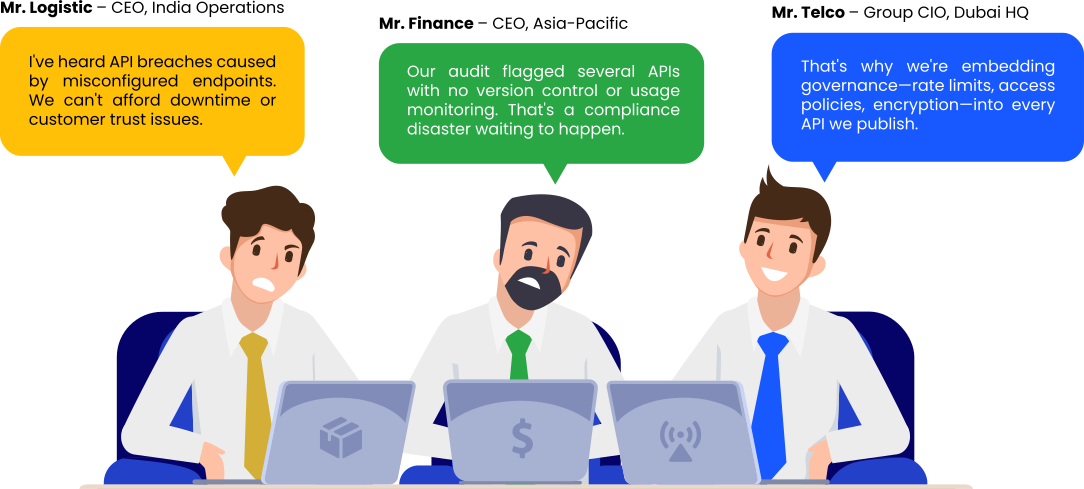
Without governance, the very APIs that power innovation can also introduce risk. According to IBM’s Cost of a Data Breach Report 2023, breaches involving APIs cost companies an average of $5.2 million globally.
Misconfigured or poorly governed APIs are a leading cause of data exposure, especially in finance and logistics, where customer information flows across complex systems. As APIs serve as the foundation of digital ecosystems, unchecked sprawl, lack of version control, and absent access management lead to regulatory penalties, failures, or distrust.
API governance ensures:
- Clear policies for access and usage
- Auditable logs and version tracking
- Data masking, rate-limiting, and quota enforcement
- Secure, scalable, and compliant integration layers
Governance turns chaotic integration into strategic orchestration.
APIs Drive ROI
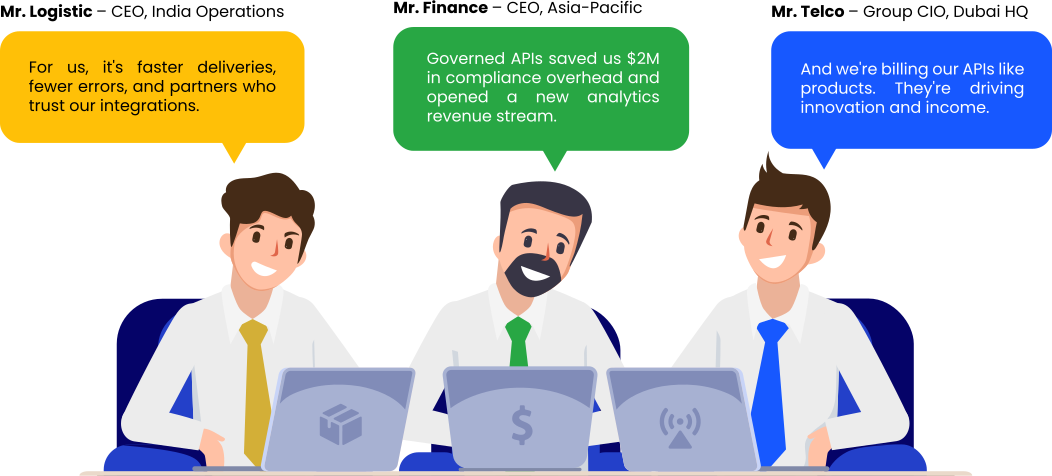
Every API request is a business decision waiting to be measured. Companies that invest in governance gain the ability to track performance, cost, and usage, turning APIs into strategic assets.
Governance isn’t overhead. It’s how you turn invisible infrastructure into visible value.
According to McKinsey, companies that treat APIs as products backed by governance, can increase revenue by up to 20%. IBM’s latest report shows that secure, governed APIs cut breach-related costs by over $2 million per incident.
Governance adds the layer of accountability needed to ensure APIs contribute directly to the bottom line:
- Faster partner integrations = quicker market entry
- Fewer system failures = reduced downtime and SLA penalties
- Clear usage metrics = better monetization strategies
- Audit-ready logs = lower compliance and legal costs
Smart businesses don’t just build APIs—they manage them with the same discipline as financial assets. Through strong governance, they create their own API economy and unlock new revenue opportunities.
Monetizing APIs
There are several effective strategies to monetize APIs. One common approach is charging for API access, where organizations offer secure, authorized access to their APIs as a paid service.
Take Twilio, for example. Its communication APIs power companies like Airbnb, allowing hosts and guests to call or text without revealing personal numbers. Airbnb didn’t need to build global telecom infrastructure—it just plugged into Twilio’s API. Twilio, in turn, monetizes through usage-based pricing. It’s seamless integration for Airbnb, and recurring revenue for Twilio.
Beyond personalization, API monetization helps uncover untapped market segments. Analyzing user behavior and transaction patterns enables businesses to craft niche solutions that resonate with specific audiences building loyalty and competitive differentiation over time.
On the operational side, API integration also boosts internal efficiency. By seamlessly connecting disparate systems and data sources, APIs reduce friction, streamline workflows, and eliminate manual processes, turning technical connectivity into measurable business value.
Now, you know what APIs and the API economy are all about how to use them, benefit from them, and why governance is the backbone of it all. You’re aware of the opportunities to generate direct and indirect income. And that means you’re ready to lead.
But to go further, you need a partner with experience, expertise, trustworthiness and drive strategy, implementation, and compliance from end to end.
The Trusted API Partner — XAPI by X-Venture
At the heart of API success lies strategic governance. That’s where X-Venture steps in with XAPI, our flagship product. XAPI provides:
- Comprehensive API lifecycle management
- Secure onboarding, versioning, and access control
- Real-time dashboards for usage, cost, and performance
- Automated policy enforcement and audit readiness
Whether you’re integrating partners or launching new services, XAPI helps ensure every API delivers value—with control.
Let's Talk

Marketing Team
Partner - API, AI & Data Governance
- info@x-venture.io
- (+94) 77 40 86 590
We build. We fix. We future-proof
Click to rate this post!
[Total: 0 Average: 0]
Contact
Thank you for interested in reading content more. Please fill the following form to continue
Related Posts

AI Without Governance is a Ticking Time Bomb – But Here’s How to Future-Proof It
- Guest Author
- 24 April 2026
“AI can elevate your business or destroy trust – governance is the difference.” Downl ..

Data-Driven Decision Making: Harnessing API Analytics for Business Insights
- Guest Author
- 8 April 2024
Imagine the frenzy of activity during the Black Friday Cyber Monday (BFCM) period—consumers f ..