Data Breaches Are Not Just an IT Problem – Why Finance Leaders Must Act Now
- Guest Author
- 8 May 2026
- Blog
- 0 Comments
“How AI Strengthens Data Management, Quality, Protection, and Compliance.”
The Burning Problems
Finance Institution | Country | Year | Data Breach Incident | Loss / Impact |
Qatar National Bank | Qatar | 2016 | Confidential client information leaked due to cyberattack by Turkish hackers | Severe reputational damage; exposed sensitive financial data |
Equifax | United States | 2017 | Personal data of 147 million individuals exposed due to poor patch management | $700+ million in settlements and fines; massive brand damage |
First American Financial Corporation | United States | 2019 | 885 million financial documents exposed due to misconfigured application | Customer trust erosion; legal risks and investigations |
National Star Mortgage | United States | 2023 | Sensitive borrower information exposed through unsecured database | Regulatory scrutiny; reputational damage; class action risks |
LoanDepot | United States | 2024 | Data breach affecting 16.9 million individuals after ransomware attack | Significant operational disruption; legal consequences |
Finastra | United Kingdom | 2024 | Unauthorized access to secure platform; potential theft of 400GB of sensitive data | Client trust risks; operational and reputational impact |
Commercial Bank of Ethiopia | Ethiopia | 2024 | System glitch allowed unauthorized ATM withdrawals totalling $8 million | Financial loss; operational disruption; public trust issues |
Equity Bank Kenya Limited | Kenya | 2024 | Debit card fraud leading to theft of Ksh 179 million from customers | Financial losses; security enhancement initiatives |
SRP Federal Credit Union | United States | 2024 | Ransomware attack exposing data of over 240,000 members | Legal exposure; provision of identity protection services |
Evolve Bank & Trust | United States | 2024 | Cyberattack by LockBit ransomware group, impacting fintech clients | Customer trust loss; ongoing regulatory investigations |
Cargills Bank | Sri Lanka | 2025 | 1.9TB of customer and staff data compromised; major internal governance failures | Massive trust loss; potential regulatory penalties |
Bank Sepah | Iran | 2025 | Hacker group accessed over 42 million customer records, exposing sensitive data | Massive customer data exposure; political and public backlash |
Heartland Bank | United States | 2025 | Email system breach compromising customer sensitive information | Customer data breach; regulatory notification requirements |
Australian Super Funds | Australia | 2025 | Cyberattack resulting in theft of $500,000 and personal data compromise | Government scrutiny; intensified cybersecurity efforts |
What do you think?
As data fuels the growth of countless industries, it has also become an attractive target for cybercriminals.
Your business and client’s personal data including names, addresses, Social Security numbers, credit card details, login credentials, and other sensitive data can be exploited for identity theft, financial fraud, and a wide range of malicious activities.
Companies of all sizes, across all regions and industries, are facing escalating threats to their information security.
Among them, the finance, banking, and insurance sectors remain the most vulnerable.
Here is the number of financial, banking and insurance industry data breaches reported in the US.
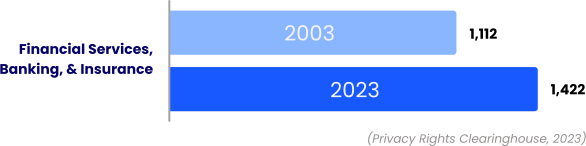
At a glance, over a ten-year period, the numbers may seem relatively stable. But that stability is misleading.
AI technologies have undoubtedly helped mitigate breaches, yet even with AI in place, the volume of incidents is still far too high for industries handling the world’s most sensitive financial data.
0
%
days faster
Organizations that extensively leverage AI and automation for security can identify and contain data breaches 108 days faster than those that don’t, resulting in nearly $1.8 million in cost savings. (IBM, 2024).
0.0
M
Saving
Common Ways Data Breaches Are Happening
(Based on Verizon Data Breach Investigations Report 2024)
| Method | Details |
| Phishing Attacks | Phishing remains the #1 social attack vector. Median time to fall for phishing emails is under 60 seconds after opening. |
| Credential Theft | 24% of breaches involve stolen credentials as the initial action. |
| Exploitation of Vulnerabilities | Exploitation of system vulnerabilities surged 180% over last year, especially through web apps and VPNs. |
| Web Application Attacks | Web applications are the most targeted assets, enabling credential theft and vulnerability exploitation. |
| Miss delivery and Errors | 28% of breaches involve internal human errors like sending sensitive data to wrong recipients. |
| Ransomware and Extortion | Combined, these account for 32% of all breaches. Ransomware/extortion threats are rising across industries. |
| Third-Party Supply Chain Attacks | Breaches via third-party vendors and software vulnerabilities increased by 68% this year. |
| Lost or Stolen Assets | Physical loss or theft of devices/media remains a significant contributor to breaches. |
AI can play a decisive role in avoiding these risks
- Real-time anomaly detection: AI continuously monitors system behaviours and flags phishing attempts, insider threats, and suspicious access patterns.
- Automated access control: AI enforces strict role-based access, preventing unauthorized access and reducing human error.
- Predictive vulnerability management: AI identifies vulnerabilities before exploitation happens, ensuring patches are prioritized based on risk.
- Supply chain risk monitoring: AI scans third-party vendors and external systems for compliance gaps and threats.
- Behavioural analytics: AI learns normal user behaviour and alerts when deviations occur, enhancing fraud detection and insider threat prevention.
Data Compliance for Fintech Businesses
Moreover, financial institutions must align their data governance practices with critical industry regulations and standards such as:
- Gramm-Leach-Bliley Act (GLBA) – mandates financial institutions to explain information-sharing practices and safeguard sensitive data.
- Payment Card Industry Data Security Standard (PCI DSS) – sets requirements for organizations handling credit card information.
- Sarbanes-Oxley Act (SOX) – enforces strict reforms to improve financial disclosures and prevent accounting fraud.
- Basel III Framework – strengthens regulation, supervision, and risk management within the banking sector.
- ISO/IEC 27001 – an international standard for managing information security.
- Dodd-Frank Wall Street Reform and Consumer Protection Act – requires transparency in financial practices and consumer protection.
- General Data Protection Regulation (GDPR) – imposes strict requirements on data protection for EU citizens, impacting global financial institutions.
In addition to global regulatory frameworks, financial institutions must often comply with local and industry-specific policies, which can vary based on your jurisdiction and business activities.
- National data protection laws (e.g., Australia’s Privacy Act, New Zealand’s Privacy Act 2020, Singapore’s PDPA)
- Central bank and financial authority guidelines (e.g., Reserve Bank of India cybersecurity framework, FDIC in the U.S.)
- Banking-specific ISO extensions (e.g., ISO 20022 for financial messaging security)
- Industry codes of practice and internal compliance mandates
- Cloud security and outsourcing rules set by financial authorities
Failure to comply with these standards can result in enforcement actions, financial penalties, reputational damage, or even loss of banking licenses.
AI-powered governance solutions help banks and financial services institutions interpret and automate compliance across diverse legal landscapes, ensuring they meet both international and local obligations with precision.
Unified Governance + AI = Compliance Readiness
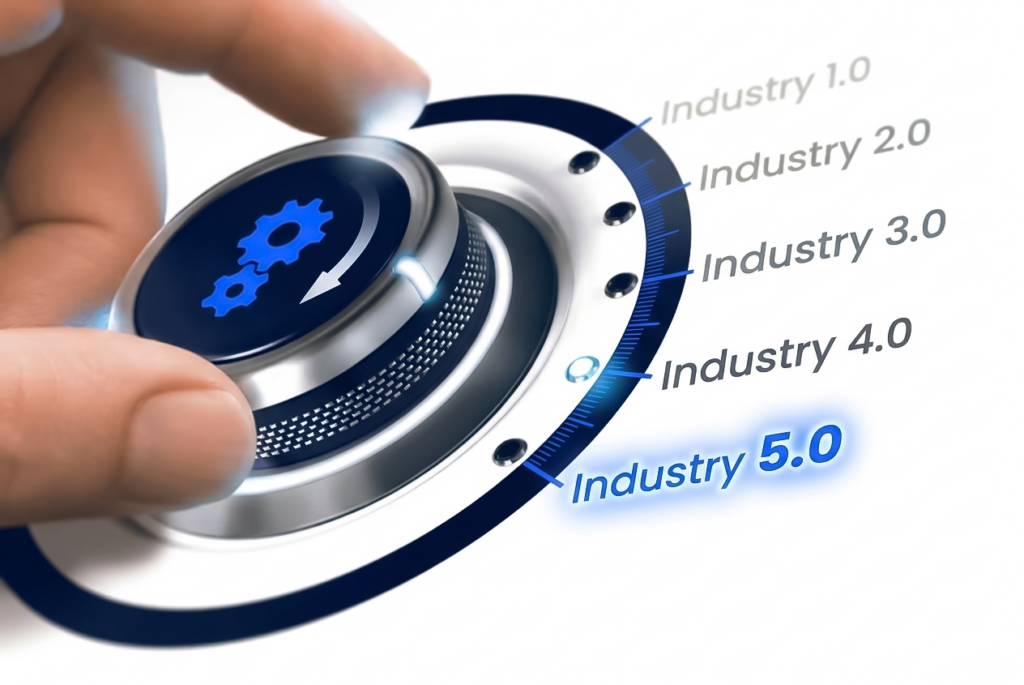
As we move into Industry 5.0, digital transformation is no longer just about automation or speed, it’s about trust, transparency, and human-centered innovation. This new era brings together AI, APIs, and complex data systems, demanding more than isolated control points. What it requires is unified governance.
Unified governance means governing data, AI, and APIs together as one interconnected system. It’s not just about policy enforcement. It’s about building a shared foundation where systems are secure by design, explainable by necessity, and compliant by default.
For fintech companies, the stakes are especially high. You’re operating in high-risk, high-regulation environments, where a data leak, API exploit, or rogue AI decision can damage more than just operations. It can erode customer trust and invite regulatory scrutiny. Fragmented governance frameworks can’t keep up.
“Industry 5.0 and beyond — data governance is unified governance.”
— X-Venture
Artificial Intelligence is revolutionizing data governance by making it proactive, scalable, and continuously adaptive.
AI-driven data governance frameworks enable:
- Automate compliance checks across data sources and jurisdictions, reducing manual oversight risks
- Maintain real-time audit trails that stand up to regulatory scrutiny and internal controls
- Manage data subject rights (access, deletion, portability) with speed and consistency
- Trigger immediate alerts when systems veer toward non-compliance
- Automatically identify and classify sensitive data, improving accuracy and reducing exposure
- Detect anomalies in real time, flagging suspicious activity before it becomes a breach
- Enforce policies consistently across systems, minimizing human error and bias
- Monitor AI model behaviour to ensure ongoing alignment with ethical and regulatory standards
Being compliance-ready protects not just against penalties but strengthens overall resilience and brand credibility.
How MCP (Model Control Protocols) Can Be Useful
Model Control Protocols document and track the full lifecycle of AI models, including:
- Training data sources and assumptions
- Intended use cases and operational boundaries
- Monitoring model drift, bias, and fairness over time
MCP is a new standard designed to connect AI assistants directly to the systems where data lives, such as content repositories, business tools, and development environments. Its goal is to ensure that frontier models produce better, more relevant, and context-aware responses.
Embedding MCPs strengthens governance by ensuring transparency, accountability, operational alignment, and ongoing regulatory read
Artificial Intelligence is no longer just a technical upgrade. It’s a complete package for financial institutions seeking better control of their data landscape.
From end-to-end data management and quality assurance to governance enforcement and sensitive data protection.
AI empowers organizations to move from reactive to proactive.
What X-Venture Delivers
At X-Venture, we help businesses secure their data and future with:
- Automated compliance checks and real-time monitoring dashboards for data integrity.
- Advisory support for internal legal and compliance teams, combining deep expertise in both legal frameworks and technical systems.
- Secure AI deployments, preventing accidental data leaks.
- Governance support for LLMs and ML deployments, ensuring your AI models remain compliant, secure, and explainable at every stage.
We build governance-first AI systems that drive trust, resilience, and sustainable growth.
Let's Talk

Marketing Team
Partner - API, AI & Data Governance
- info@x-venture.io
- (+94) 77 40 86 590
We build. We fix. We future-proof
Click to rate this post!
[Total: 0 Average: 0]
Contact
Thank you for interested in reading content more. Please fill the following form to continue
Related Posts
API Economy: Transforming Business Landscape Through Strategic API Adoption.
- Guest Author
- 11 December 2023
The modern digital landscape is leaning heavily on microservices, like Lego blocks of software, ..
The Secret Weapon That Turns Struggling Businesses into Market Leaders
- Guest Author
- 19 April 2026
“What do high-performing companies have in common? Clear, enforced data governance.” Downlo ..